
icon
News Community Store
Back to home

Daily Mobile Gaming News

A cleaner daily brief on mobile game launches, updates, and pre-registration moves worth watching.

Nexon hires Chernin to adapt Arc Raiders and The Finals
News Mon, Oct 5, 2026

Nexon hires Chernin to adapt Arc Raiders and The Finals

Nexon has partnered with Chernin Entertainment to develop film and TV adaptations of two Embark Studio games, Arc Raiders and The Finals, Variety reports. Chernin was chosen as the primary production partner after a competitive selection process, and will lead both projects alongside Nexon and Embark Studio. Arc Raiders is an extraction-adventure multiplayer title set on a ruined, machine-threatened Earth; Nexon and Embark released it on October 30, 2025. The game has sold 16.3 million copies worldwide, according to Nexon. The Finals is a free-to-play FPS built around destructible, iconic-location arenas and team-based competition; it launched in December 2023 and has continued to receive seasonal updates since. Nexon named both IPs in the announcement and confirmed Chernin will handle film and TV development across the two properties. Chernin Entertainment’s film credits include this year’s hit horror movie Backrooms, the Planet of the Apes reboot series, and the Fear Street films, and the studio has worked on TV series such as Apple TV+’s The Days of Darkness and Netflix’s The World of Chaos. David Ready, president of Chernin’s film division, called Arc Raiders and The Finals “ambitious global IP” with potential across film and television and said the studio is honored to assemble film and TV teams to bring those stories to screens. Nexon chairman Patrick Söderlund said Nexon, Chernin, and Embark’s creative teams will collaborate to extend the games’ creative vision into new formats and to reward the games’ global player communities. Takeaway: Nexon’s choice of Chernin — a studio with recent box-office and TV experience across horror and franchise reboots — makes these adaptations a single, centralized production bet hinging on two active game properties: Arc Raiders, released October 30, 2025 with 16.3 million sales, and The Finals, live since December 2023 with ongoing seasonal content. That combination keeps both the games’ existing audiences and Chernin’s production muscle at the center of how these adaptations will be built.

Nerial enters hibernation after 13 years and 11 games
News Mon, Oct 5, 2026

Nerial enters hibernation after 13 years and 11 games

British studio Nerial has announced it is entering “hibernation mode” and ending development after 13 years and 11 published games, founders François and Tamara Alliot wrote on X. The decision was made together with partners at Devolver, and the studio says the team will seek new opportunities following the pause. The post revisited Nerial’s catalogue, naming Reigns (2016) and its licensed adaptations of Game of Thrones, Animal Farm, Three Kingdoms and The Witcher, along with original titles such as Card Shark and The Crush House. The founders called The Crush House the studio’s “most ambitious project,” praised Card Shark’s community, and described the studio’s run as “an incredible adventure.” Those are tidy highlight reels — and a fair amount of creative mileage for a small team. Nerial was acquired by Devolver in 2021; the founders thanked Devolver and the many collaborators who worked on the studio’s projects, including the licensed Reigns titles. They wrote, “While this marks the end of Nerial as we know it, it's not the end of game dev for us,” and said François’s “unrelenting drive to make games is as strong as ever.” The announcement frames the next chapter as a break first, not an exit. Takeaway: Nerial is pausing studio development but its co-founders plan to return to game development after taking time to rest and reflect, while current team members look for new opportunities in the meantime.

PortBlocks hits #1 on Korea Google Play and #2 on App Store after Sept 21 launch
News Mon, Oct 5, 2026

PortBlocks hits #1 on Korea Google Play and #2 on App Store after Sept 21 launch

PortBlocks, the new mobile autobattler from HYPERRISE, reached number one on Korea's Google Play popularity chart on October 3 and number two on the Korean App Store. The game launched worldwide on September 21 and has earned a 4.5 out of 5 user rating so far. PortBlocks opened in roughly 176 countries on September 21, and climbed to the top of Google Play's popularity rankings 13 days later on October 3. HYPERRISE describes the core loop as 'mobile fortress design,' where players combine blocks and weapons to build moving fortresses; the studio says players have praised the strategy and game polish. The game is set in a post-apocalyptic world where energy collapse has toppled civilization. Players clear stages while assembling moving fortresses from over 40 block types plus more than 100 weapons and characters. Block choice and placement change attack patterns, survivability, and combat flow, letting builders pursue different synergies and builds. A current New Welcome Event awards 1,000 weapon summon tickets to players who log in and play. HYPERRISE CEO Lee Won-geun said players have connected with the idea of weighing 'one block, one weapon' when designing fortresses, and the studio pledged continued stable service and regular content updates. Takeaway: if you want to experiment with the game's 100+ weapons and characters, the New Welcome Event's 1,000 weapon summon tickets are available now for logging in and playing.

PocketGamer.biz Podcast Ep.105: Zynga's near $400M Supercell buy
AI + Mobile Sun, Oct 4, 2026

PocketGamer.biz Podcast Ep.105: Zynga's near $400M Supercell buy

PocketGamer.biz hosts Craig Chapple and Paige Cook discuss this week's games business headlines on episode 105 of the Week in Mobile Games Podcast, covering EU regulation, an M&A near-miss, cloud gaming and AI PR noise in a roughly 30–40 minute roundup. The episode walks through the European Commission's CPC action targeting King, Supercell, Mojang and others over virtual currencies, plus the EU Kids Act draft that flags daily log-in bonuses and activity streaks. Mark Pincus appears in the conversation with his claim that Zynga nearly acquired Supercell for $400 million back in 2012, a concrete M&A anecdote that sparks the hosts' discussion. Craig and Paige also spend time on cloud gaming's future and Craig's long-form rant about what he calls the "insane AI PR machine" — expect skeptical takes rather than marketing fluff. The show is available on YouTube, Spotify and Apple Podcasts, and PocketGamer.biz points listeners to its podcast page and conference listings for more industry programming. Takeaway: episode 105 bundles a named regulatory action, a specific M&A revelation (Zynga nearly bought Supercell for $400M in 2012) and a pointed debate on AI PR and cloud gaming — a compact set of items listeners can follow up on via the episode's links.

Roco Kingdom opens Japanese closed beta on Oct. 27 as open-world remake of 2010 browser classic
News Sun, Oct 4, 2026

Roco Kingdom opens Japanese closed beta on Oct. 27 as open-world remake of 2010 browser classic

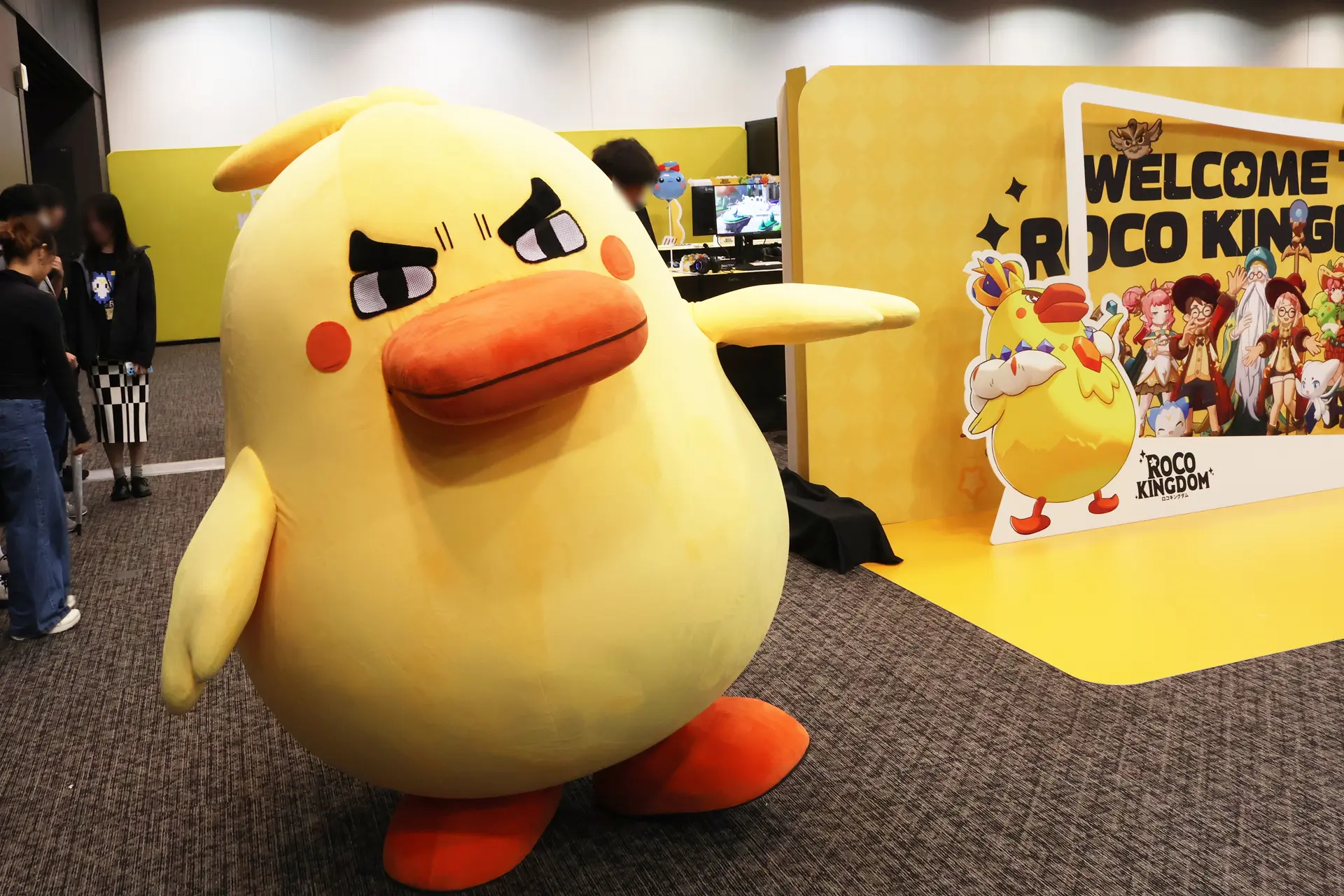
Roco Kingdom is returning to Japan as a rebuilt open-world RPG from Morefun Studios, and a Japanese closed beta test begins on October 27. The project reworks the original 2010 browser game into a new title where players explore the Karosia continent, befriend living creatures called Jini, and collect them without using a traditional gacha system. The original Roco Kingdom launched in China in 2010 as a browser game aimed at children and operated for 16 years; development of the current remake started in 2020 as a mobile project. Morefun Studios launched the new version in China in March 2026, and the Japanese rollout will begin with the October 27 closed beta — officially called the “Kwakk Test” — after which a formal local release date will be announced. The game is described as a complete rebuild: open-world exploration fused with monster-collection mechanics, presented as a standalone RPG rather than a browser port. Narrative director and localization lead Xiao Ye spoke at the Japanese press event and framed the game around three keywords: “encounter,” “stay close,” and “walk together.” At launch the world will contain roughly 400 Jini species; most encounters are meant to happen organically in the field rather than through randomized shop pulls. Each Jini species can vary by individual appearance and temperament, so even two Jini of the same species will look and act differently. That variety underpins both the discovery loop and the social flavor of travel: Jini don’t simply follow — they have lifestyles, sometimes act independently, and form stronger bonds with players who observe and respond to them. Karosia is built as a living space with distinct biomes and local ecosystems. Day/night cycles and changing weather do more than alter the skybox: they affect exploration and encounter behavior. The team said modern tech was brought in specifically to express environmental shifts and make the world feel immersive. In the demo build shown after the event, players can stand and watch groups of Jini behaving autonomously — duck-like “Dakki-ji” patrolling grass, turtle-like Jini swimming or retreating into shells when approached — and those on-screen actions are the same behaviors driving actual gameplay rather than staged video effects. The capture system uses an in-world tool called an orb, and capturing is tied to meeting Jini in the world rather than obtaining them from gacha draws. The orb interface is designed for immediacy: you can throw from the exploration screen without opening menus, lock on to a target, and make captures feel natural for players unused to complex mobile UIs. The demo’s capture flow emphasized a low barrier to entry, and Morefun said mobile content will largely match the PC/console experience; the release will also support cross-platform multiplayer so players on different devices can adventure together. Combat and multiplayer details were clarified at the event. PvP exists, but victory is decided by Jini skills, type matchups, and player strategy rather than by pay-to-win mechanics. The planned monetization model currently centers on a battle pass; one of the pass rewards is a choice between two special Jini. Morefun also plans Roco cosmetics that can enable special animated interactions with Jini, so purchased items will offer visual and performative variety rather than guaranteed competitive power. The studio added that buying the battle pass won’t be the only route to those special Jini: visiting the field of a player who did purchase the pass will give non-buyers a chance to capture the same special Jini. The press event included a short stage program with voice actors who work on the project: KENN voices Iris and Aina Aiba voices Yessy, and both performed live narration and scene work alongside a gameplay demo. After the stage portion reporters were invited to play a demo build. New players choose an initial partner Jini at the start — the water-type Powawa, grass-type Nyabu, or fire-type Sparka — and then explore an open field populated with numerous Jini. The demo made a point of letting players observe Jini behavior before engaging; the team emphasized that understanding a Jini’s habits offers practical capture and communication clues, not just flavor. Technical hurdles were part of the behind-the-scenes conversation: Xiao told 4Gamer that optimizing thousands of independently behaving Jini across platforms was a major engineering challenge, and that redesigning older character concepts to better fit modern tastes required close attention. In particular, some earlier humanoid Jini were reworked into animal-like designs for consistency with the new art direction. Xiao also shared player-demographic notes from the China launch: university students and players in their twenties made up the largest group early on, and Morefun says it intends the game for a broad age range — from young children up through older adults who might remember the original browser version. On monetization Xiao reiterated the non-gacha intent and explained planned paid features: the battle pass, cosmetic Roco items with Jini-synergy animations, and the special-Jini rewards tied to the pass. Formal release timing for Japan remains open beyond the October 27 Kwakk Test; development and localization will continue while the studio collects feedback from the closed beta. Takeaway: If you want to experience Roco Kingdom’s capture-first loop and living ecosystems firsthand, the Japanese closed beta opens October 27; it highlights 400 Jini at launch, a non-gacha capture system using in-world orbs, cross-platform play, and a monetization plan focused on a battle pass plus cosmetic Roco items rather than random pull mechanics.

勇者刑に処す -Game of the GODDESS- unveils PV and new characters (Oct 3, 2026)
News Sat, Oct 3, 2026

勇者刑に処す -Game of the GODDESS- unveils PV and new characters (Oct 3, 2026)

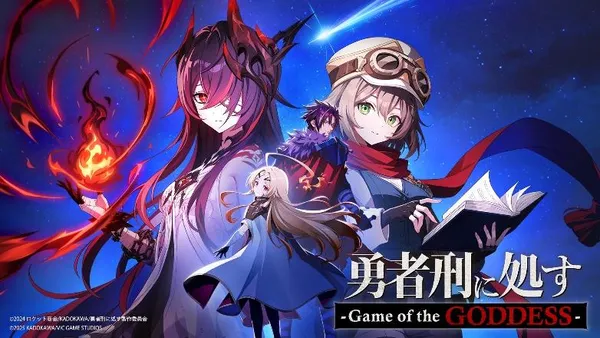
KADOKAWA announced new game information for 勇者刑に処す -Game of the GODDESS- during the October 3, 2026 segment of the Dengeki Bunko Autumn Festival Online 2026, and AppMedia reported the reveal on the same day. The publisher—KADOKAWA, led by CEO Tsuyuno Takeshi (夏野剛)—published a second teaser key visual and the game's second teaser PV, and confirmed that the title is being developed as a mobile game by VIC GAME STUDIOS. The stream also introduced two original game characters and launched a follow-and-repost campaign on X for signed cast shikishi, all announced publicly at the event. The teaser KV and PV place the new game squarely inside the world of Rocket Shokai's dark fantasy series 勇者刑に処す 懲罰勇者9004隊刑務記録, a property that has collected awards over recent years: the work won a KAKUYOMU Award in 2020, placed in the Next Light Novel Award in 2021, and appeared in Kono Light Novel ga Sugoi! rankings in 2023. The PV opens with the line “A new brave punishment world opens—” and follows a structure that pairs the established characters Zairo and Teoritta with two game-original figures, Noi Marjella and Lisabella, who were shown for the first time in the new KV. The stream stated that the game will depict how those four characters—the pair from the anime and the two originals—meet and have their stories intersect within the shared setting. Production details landed alongside the character reveals. KADOKAWA is handling domestic publishing while VIC GAME STUDIOS is in charge of development; Rocket Shokai, the original author collective, will supervise the game-original scenario. The PV and the event explicitly noted that the project is under mobile development, and the teaser material gives early flashes of each new character’s personality rather than full story beats. In addition to Noi and Lisabella, new visuals for original novel characters Patoshe Kivia and Dotta Luzras were released, expanding the cast that first appeared in the initial teaser KV which already featured Zairo Forvartz and Teoritta. Casting and promotional timing were confirmed on stage. Voice casting announced Noi Marjella will be voiced by Tomita Miyu and Lisabella by Izumi Fuka; each cast member provided official comments during the stream. To mark the original-character reveal, the team opened an X follow-and-repost campaign offering autographed shikishi: Tomita Miyu’s signed board is available via entries from October 3, 2026 through October 9, 2026 (ending 23:59), and Izumi Fuka’s signed board is available from October 10, 2026 through October 16, 2026 (ending 23:59). Entrants must follow the official account @yushakeiGODDESS and repost the campaign tweet after checking the posted campaign notes; winners will be chosen by lottery, three winners per cast prize. The stream kept a steady flow of concrete releases: the PV’s debut, the two game-original character art reveals, fresh visuals for two additional original-novel characters, the mobile development disclosure, and a timed social campaign with exact entry windows. AppMedia carried the event coverage on October 3, 2026, citing KADOKAWA’s press release. For readers tracking talent and launch signals, the practical details to note are the developer (VIC GAME STUDIOS), the publisher (KADOKAWA), the author supervision by Rocket Shokai, and the two signed-shikishi campaign windows in October 2026. If you want one quick takeaway: the team released a second PV and KV on October 3, 2026 that introduces game-original heroines Noi Marjella and Lisabella, confirms mobile development by VIC GAME STUDIOS with KADOKAWA publishing, and ties the new content to the property’s award history from 2020, 2021, and 2023 while opening two time-limited X campaigns for signed shikishi.

Lunchbreak Tactics launches on Android — supermarket autobattler
Launch Fri, Oct 2, 2026

Lunchbreak Tactics launches on Android — supermarket autobattler

Lunchbreak Tactics, a new strategic auto-battler from Borealys Games, is now available on Android via the Google Play Store. Set in the backroom of Anymart, the game turns a bored lunch shift into a competitive card-battle loop where you play as the newest trainee and build a squad of living store products to fight other players in asynchronous matches. At the start of each run you pick one Hero and two Clans; the Hero brings a passive power while the Clans determine which cards appear in your shop. You spend gold to buy and upgrade units, freeze cards you don’t want to lose, and attach items to your team across twelve rounds per run. Battles then resolve automatically, with the core loop leaning on ridiculous synergies and inventory creativity — yes, toilet paper and a slow cooker are both viable weapons here. The game leans on inspirations like Hearthstone and Super Auto Pets, but the match structure is firmly autobattler: assemble, upgrade, and watch the results play out against other players. Lunchbreak Tactics dresses its mechanics in grocery-store silliness: mundane Anymart products become living units, and the escalation from bored breakroom pastime to full-blown obsession is baked into the run progression. Your end-of-run target is, amusingly, the Ultimate Slacker of the Month — aka the Employee of the Month ultimate card master — which fits the premise that the most mundane job on Earth can still host surprisingly fierce competition. The Android release includes a free-to-play lite version that gives access to two Heroes and two Clans; the complete package unlocks everything for $5.99. If you want a related diversion, we also covered Tap, Hoard & Automate Buttons in Buttons Up! Idle Clicker Game, which talks about tap mechanics, hoard upgrades and automate features in a clicker context. Final takeaway: the lite build gives a taste with two Heroes and two Clans, but the full $5.99 unlock is the shortcut to every Hero, every Clan and the broader set of silly supermarket synergies you’ll want to experiment with.

Aion 2 hits 170K concurrent on Steam after Sept 30 early access
News Fri, Oct 2, 2026

Aion 2 hits 170K concurrent on Steam after Sept 30 early access

NCSoft’s new MMORPG Aion 2 launched paid early access on Steam on September 30 and drew an immediate global reaction: a day-one Steam peak of about 170,000 concurrent players and roughly 150,000 the following day. The early access window is gated to buyers of paid Founders Packs starting at $25 (about 33,000 KRW), and the game is scheduled to switch to free-to-play on October 5. Revenue numbers landed fast: Aion 2 reached No.1 on Steam’s global revenue chart during the early access period, despite the full free launch being five days away. Steam wishlists had already passed 1.3 million before early access began, and Twitch peak viewership climbed above 250,000 viewers. SteamDB and other tracker snapshots are being cited for the concurrent player figures and chart positions, which together map the game’s initial traffic profile across platforms. Player feedback and review metrics are mixed but lean positive at this early stage. On Steam, Aion 2 has around 3,000 reviews with a 76.2% “Mostly Positive” rating while the in-game cash shop and economy are live during the paid early access period. NCSoft released Aion 2 after a year-long live run in Korea and Taiwan, and servers appear generally stable under heavy load: some extended maintenance and tutorial-area disconnects occurred, yet many reports point to solid resource optimization even when large crowds congregate in one zone. Design and content details that readers asked about are concrete. The world is roughly 36 times larger than the original Aion’s, with a flight system integrated into exploration and combat rather than a cosmetic gimmick. Combat mixes ground and air engagements with a faster, more action-oriented approach that borrows modern targeting ideas. Eight classes are available — Protector, Blade, Slayer, Archer, Mage, Spirit, Healer, and Guardian — preserving the original IP’s class identities while offering clear role definitions for newcomers. The game includes a collectible pet system tied to field monster drops, over 1,100 achievements, multiple mini-games, a variety of PvE raids and PvP events, and a multi-currency economy that players interact with through auctions and exchanges. The business model and some legacy design choices have become talking points in Western coverage. The Founders Pack bundles five days of early access plus a 30-day “Kwayling Premium Membership” equivalent to a $15 monthly value (about 20,000 KRW). That membership grants access to a Kuna exchange that converts in-game currency Kina into premium currency Kuna, a feature German outlet MeinMMO flagged as a potential pay-to-win (P2W) concern for Western players. Criticisms from Western outlets also highlight UI and menu structures, camera behavior, and an automated pathing feel that carry traces of mobile-centric design. Some reviewers note low challenge in the earliest boss encounters and a narrative that feels shallow at launch, while others praise the breadth of activities and content depth unlocked even in early access. Comparisons to NCSoft’s 2024 release Throne and Liberty (TL) are already underway. Aion 2’s current early access concurrent peak exceeds TL’s early numbers by roughly three times according to SteamDB-derived tallies, and analysts quoted in coverage propose that a conservative post-free-to-play conversion could push Aion 2 into the 300,000 concurrent range or higher. That projection rests on the documented early access peaks, the October 5 free launch date, and the game’s existing wishlist and streaming metrics. If October 5 brings the expected influx, Western reactions to the monetization and UI choices will be the clearest signals of how sustainable the early surge becomes. Takeaway: Aion 2’s early-access traffic, Steam revenue peak, and the 1.3M wishlists show a heavy opening-week footprint heading into the October 5 free launch; the concrete pivot point ahead is how Western players respond to the Founders Pack’s bundled Kwayling membership and the game’s mobile-heritage UI during the mass free-to-play conversion.

Fortnite launches Fortnitemares 2026 for October events
News Fri, Oct 2, 2026

Fortnite launches Fortnitemares 2026 for October events

Epic Games Korea is rolling out Fortnitemares 2026 in Fortnite across October, bringing cursed characters, new weapons, and override effects to Battle Royale, Horde Rush, and Reload modes. The event runs for the full month and includes timed map changes, new loot, and a slate of horror-themed outfits and accessories released throughout October. Battle Royale keeps Freaky Fields and adds a new area called Nightmare Neighborhood, where defeating Freddy Krueger drops Freddy’s Claw — a melee that lets you blink close to enemies and follow with a slash. Players can also possess animatronic bosses from Freddy’s Pizzeria after defeating them. New and returning weapons include the Bonerattler SMG, which can detect enemies behind walls, the Wood Stake Shotgun, and the Pumpkin Launcher. Cursed cartridge overrides are available in combat, offering effects like invisibility while sprinting, boosted damage at low health, and squad-wide Halloween prop camouflage. Horde Rush returns as a limited-time survival mode where players fend off waves of monsters. Reload gains a refreshed Nitemare Island on October 8, and Reload will also host maps inspired by Stranger Things and Squid Grounds. The in-game item shop will sell a battle-worn Freddy’s Pizzeria outfit, and Epic will release costumes and accessories from a long list of horror IPs during October, including Five Nights at Freddy’s, Hazbin Hotel, A Nightmare on Elm Street, Beetlejuice, Obsession, Black Clover, Hollow Knight, 99 Nights in the Forest, The Purge, Slender Man, Predator: Badlands, and Universal Studios’ Halloween Horror Nights. Full loot lists, details on new spirits, upcoming Power Hours, and bug fixes are published on the official Fortnite blog. If you’re after Freddy’s Claw, head to Nightmare Neighborhood and take down Freddy — and if you like map variety, note that Reload’s Nitemare Island lands on October 8 alongside Stranger Things and Squid Grounds.

Leus launches Cohort Purchasing platform for mobile games
Launch Thu, Oct 1, 2026

Leus launches Cohort Purchasing platform for mobile games

Leus has launched a Cohort Purchasing platform for mobile games that lets publishers sell predicted future user value in exchange for upfront acquisition capital. The service uses historical cohort data and back-test forecasting to generate purchase offers, and Leus says it can evaluate unsaturated cohorts from as early as day seven. Leus predicts cohort performance for up to 52 weeks and makes purchase offers based on the predicted future value, allowing publishers to acquire users before those users generate revenue that can later be reinvested into marketing. Leus co-founder and managing director Halil Özdemir framed the idea bluntly: "If a cohort has a measurable future economic value, why should the founder need to borrow against it? Why not simply sell it?" Özdemir spoke on related topics at Pocket Gamer Connects London and hosted a talk titled “Future of UA: Creatives, Predictions and Funding.” Takeaway: publishers with clean cohort data can get upfront capital from Leus by selling predicted user value, with forecasts stretching out to 52 weeks and cohort evaluation starting around day seven.