
icon
News Community Store
Back to home

Daily Mobile Gaming News

A cleaner daily brief on mobile game launches, updates, and pre-registration moves worth watching.

Gods and Demons expands across Google Play, App Store and Huawei AppGallery as cross-play title
News Fri, Oct 30, 2026

Gods and Demons expands across Google Play, App Store and Huawei AppGallery as cross-play title

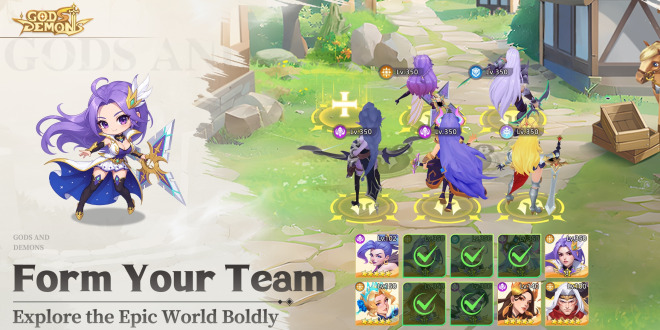
Moye Interactive Entertainment has begun rolling out Gods and Demons as a cross-play title across multiple app stores, including Google Play, the App Store and Huawei AppGallery, and is using staged testing data and platform-level engineering support to guide its phased global expansion. Xiao Han, head of publishing at Moye Interactive Entertainment (Xiaoxi Technology Group), discussed the game's dual design approach, cross‑store release strategy, technical integration with Huawei Mobile Services and AppGallery Connect, and early test metrics in an interview with PocketGamer.biz. Gods and Demons blends accessible idle progression with a 6v6 turn-based competitive core that uses more than 60 heroes, plus customizable systems named Sacred Runes, Battle Seals and Aether Cores, and team-wide passive effects from Sacred Beasts. Xiao Han explained that idle mechanics supply routine resource gains and offline rewards so players can make substantial progress with short sessions — roughly half an hour during a commute or break — while the strategic layer is where meaningful decisions and team-building depth live. Individual battles are designed to last about three to five minutes and can be paused, and standard daily tasks are intended to take less than 30 minutes, with major limited-time events running seven to 14 days to give players flexibility in engagement. The team uses modes such as the Arena, the War God’s Temple and cross-server ranked competitions to emphasize tactical choices and team composition rather than the total time spent online, and PvE content like Sky Tower and Epic Monuments present different mechanical demands compared with PvP, ensuring different playstyles remain viable across modes. On the design front, the studio focused on preventing a single dominant meta by combining three concrete levers: a roster exceeding 60 heroes, flexible itemised customisation, and varied encounters that require different tactical answers. Each hero carries four core skills but their battlefield roles can be shifted through Sacred Runes, Battle Seals and Aether Cores, and the influence of Sacred Beasts further changes how a hero functions across modes. Xiao Han noted that single-target burst damage is valuable for boss fights while coordinated crowd control plays a decisive role in ranked matches, and the Sacred Soul Altar lets players recover all resources spent on hero levelling with a single action to lower the cost of experimentation. That recovery mechanic was explicitly designed so players can try new heroes and team builds without permanently locking in their investment, making it easier to iterate on compositions across PvE and PvP challenges. Community and social systems are structured to make individual progression meaningful to a group without turning social features into extra daily chores. The guild framework is built around shared rewards where members contribute to guild tasks and benefit from collective progress, and competitive guild modes such as the War God’s Domain and cross-server ranked competitions let groups compete together for shared standings. Xiao Han framed the social experience around cooperative achievement rather than solitary leaderboard play: guild members who help their group climb a cross-server tier share a concrete reward and a sense of belonging, which the studio treats as a central design objective for long-term engagement. The studio’s approach keeps guild obligations optional and outcome-focused, intending to make social contribution rewarding in a way that complements the game’s accessibility goals. From a commercial and operational standpoint, Moye opted for multi‑store publishing from the outset to reach a broad audience across Europe and North America and to reduce dependence on any single storefront. Xiao Han said Google Play provides a foundation to validate the core experience and reach a wide audience, while AppGallery offers Huawei’s device ecosystem as a complementary growth channel — particularly in emerging markets where Huawei’s installed base provides additional discovery routes. The team sees AppGallery as lowering barriers to entry in regions that have been harder to reach through traditional storefronts, and notes that device profiles and spending patterns among AppGallery users matched the target audience for an accessible idle hero-collection game. Commercially, the publisher values having multiple distribution routes to diversify acquisition channels and to mitigate exposure to changes in individual store policies or revenue-sharing terms. Technical and QA processes were organised around a single core codebase with platform-specific SDKs, automated build pipelines, and server-driven live content to reduce the need for simultaneous client approvals across stores. Xiao Han described three pillars of their release approach: a shared core codebase with decoupled account, payments and push-notification SDKs; an automated build and release pipeline that produces platform packages under unified versioning, with automated functional checks and performance profiling; and advance store submissions for client updates, while smaller balance adjustments and events are delivered through live updates where supported. Huawei-specific integration used HMS Core and GameCenter modular components for account, payment and push services, and Moye made use of AppGallery Connect (AGC) tools for crash analysis, cloud debugging and remote configuration. Huawei also provided hands-on engineering support including prompt technical responses, remote debugging sessions for complex crashes, and access to cloud testing on real devices, which Moye credits with reducing device compatibility testing time and cost for their team of 11 developers. Early testing and metrics have directly shaped the team’s launch and monetisation plans. In an initial closed beta that was followed by a progress reset, 1,421 new players created characters in the first two days and day‑one retention reached 41.93%, surpassing the studio's internal 35% benchmark. Testing has focused on three principal areas: retention and churn points to refine early pacing and tutorials; player response to the monetisation mix, including monthly cards, growth funds, bundles and battle passes; and technical performance on lower-end Android hardware, with attention to heat generation and the readability of localized text. Those findings are feeding a phased strategy: Google Play is being used to refine the build and balance, monetisation pacing is being adjusted for expected iOS spending patterns, and AppGallery is being prepared as a channel to scale via Huawei’s device ecosystem once the core experience is validated. Takeaway: Moye is prioritising engineering separation, platform-specific operating plans and AppGallery’s device-level reach to broaden distribution while keeping a small core team efficient — their closed beta numbers and Huawei’s hands‑on tooling support are the concrete building blocks shaping the staggered Google Play, App Store and AppGallery rollout.

PUBG: Netflix developing live-action series with Donald Glover
News Fri, Oct 30, 2026

PUBG: Netflix developing live-action series with Donald Glover

Netflix is developing a live-action adaptation of Krafton's battle royale game PUBG, with Donald Glover attached to write, direct, executive produce and star in the series. Glover will develop the project with his brother Stephen Glover, who is also credited as a writer and executive producer. Krafton's entertainment division LV3H is involved on the production side. Other executive producers named on the project include Michael Schaefer of Neon TV and Fam Udeorji of Gilga, alongside LV3H producers Taeseok Jang and Sujin Lee. The deal followed extended negotiations between Netflix and Krafton, and the streamer brought Glover on board to lead the adaptation. Netflix previously had an animated PUBG project from Castlevania EP Adi Shankar in development after a 2021 announcement; this live-action effort appears alongside that earlier slate item. PUBG originally launched in 2017 as PlayerUnknown's Battlegrounds and has since earned seven Guinness World Records. Krafton announced plans to expand the franchise into film and television in 2020, and LV3H was created to develop and produce entertainment projects based on the game. Netflix's growing list of video-game adaptations now includes titles such as Assassin's Creed, a Gears of War film, a Diablo series and a Crazy Taxi movie. Netflix has not announced a production date, release window, episode count or any additional cast members for the PUBG series. With Donald and Stephen Glover attached and LV3H producing, PUBG’s long-stated film-and-TV push has a high-profile creative lead—now the only concrete scheduling facts left on the table are what Netflix still needs to announce.

Petit Planet launches December 4 on PC, iOS and Android
News Fri, Oct 30, 2026

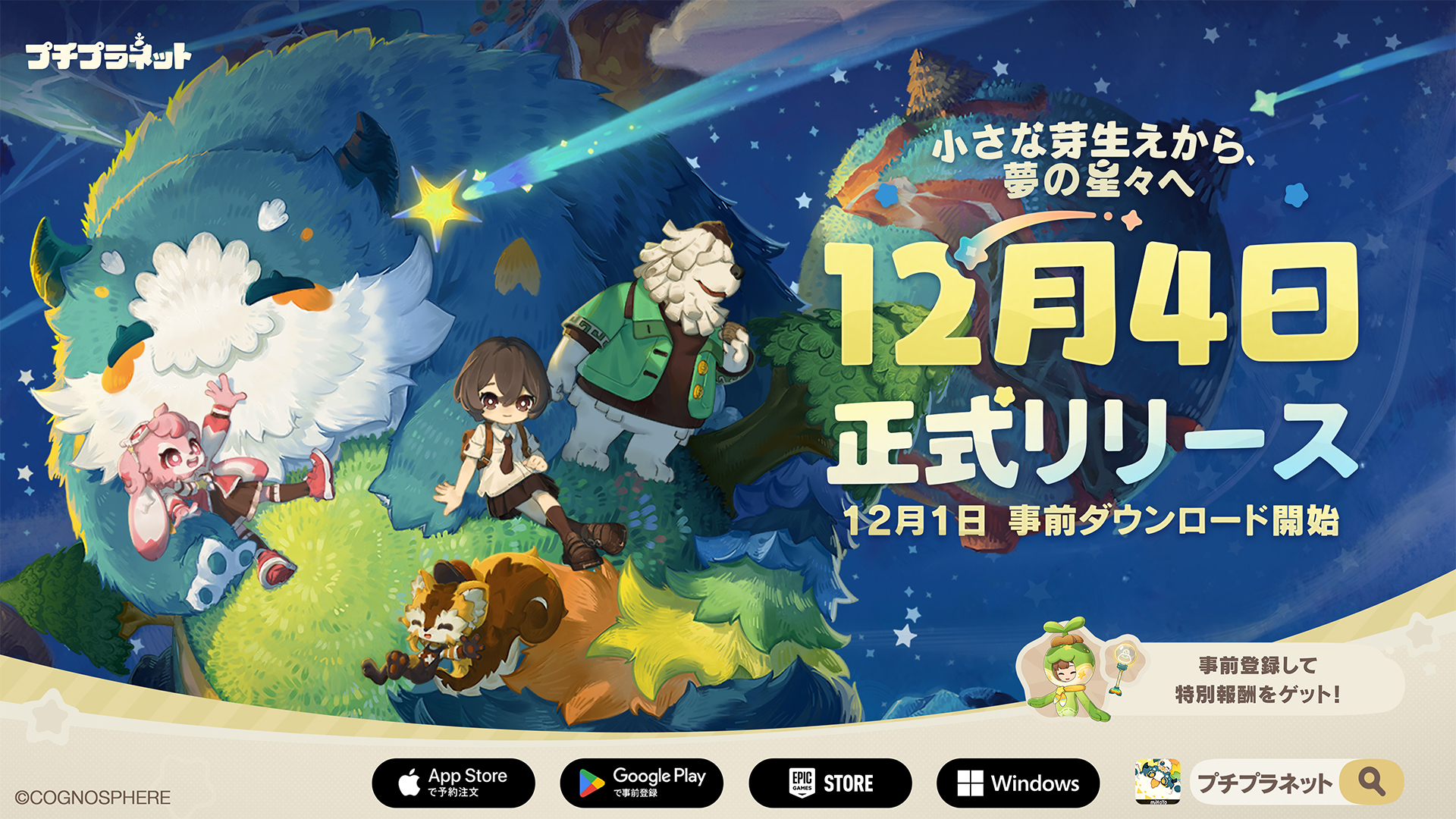
Petit Planet launches December 4 on PC, iOS and Android

COGNOSPHERE announced that HoYoverse's new slow-life game Petit Planet will release on December 4 for PC, iOS and Android, with pre-download opening on December 1. Pre-registration is live now; early sign-ups receive a bonus set including the “Starry Penlight” and a “Star Seed.” Petit Planet is HoYoverse’s first slow-life title. Players take the role of a Hoshimibito to raise a private star, tending crops, fishing, crafting and exploring stellar locales at a leisurely pace. The game also supports resident interaction and multiplayer play, so you can share part of your little planet with friends. If you want the launch-day items, pre-register now and pick up the pre-download on December 1 to have everything ready for the December 4 release.

Studio Kerosene's Firestarters launches Steam Early Access on 29th
News Fri, Oct 30, 2026

Studio Kerosene's Firestarters launches Steam Early Access on 29th

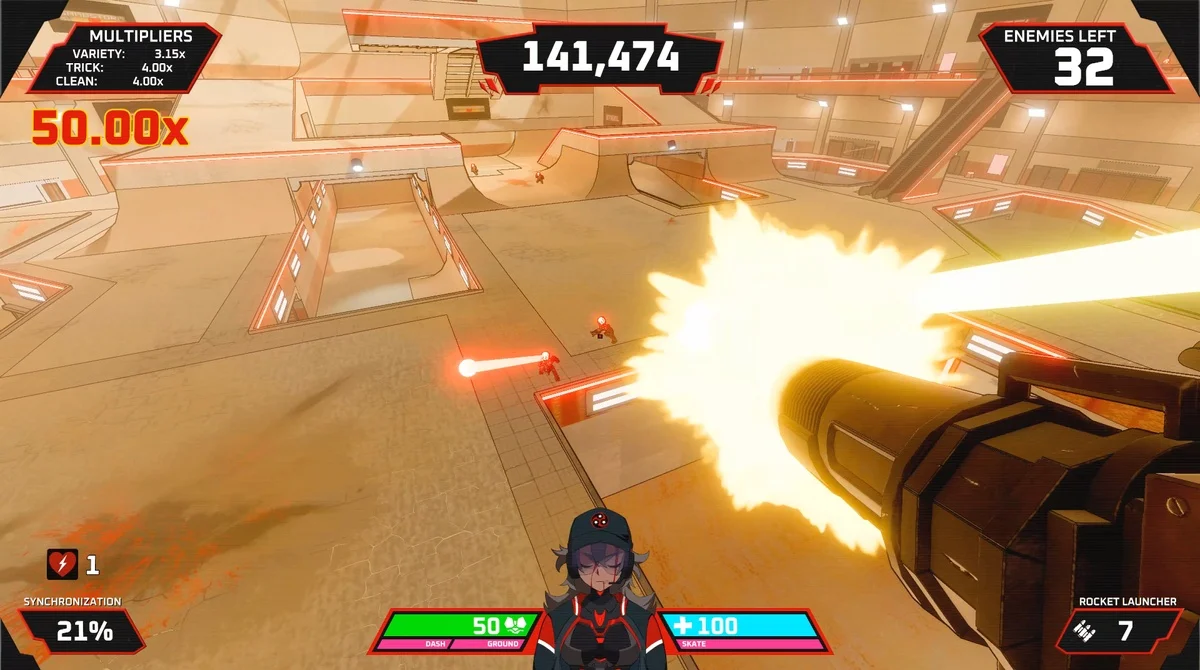
Studio Kerosene released its arcade movement FPS Firestarters on Steam Early Access on the 29th, opening with the first of four planned episodes. The Early Access build contains Episode 1; the remaining episodes are slated to arrive later as free updates, while the game’s price will rise when additional episodes launch. Firestarters puts players on rocket skates and into fast-paced combat against swarms of androids. There are no health pickups or automatic ammo resupplies in the game world; players must scavenge what they need from android wreckage, which pushes play toward aggressive engagements and continuous movement. The player character is Kera, a former delinquent now imprisoned, who enters the world’s most popular live-streamed gladiator sport, STEEL, as a new fighter. STEEL is described in the game as a tournament run by a crime syndicate that prioritizes spectacle over anything else. Episode 1 is priced at 8,200 KRW in South Korea. Studio Kerosene plans to add the remaining three episodes via free updates, and the studio says the overall price will increase when those episodes release. Lead developer Alex Harte said the team aimed to craft “a game that feels like an adrenaline shot to the system,” adding that the arena for STEEL has no safety net and the fast movement forces players to hunt targets aggressively for survival. If you’re weighing a purchase, the concrete facts matter: you can buy Episode 1 now for 8,200 KRW, play the full Early Access opening chapter immediately, and receive future episodes at no extra charge while the store price rises later.

COLOPL’s Quiz Action RPG Wiz Generation launches Dec 1, 2026 in Japan
News Fri, Oct 30, 2026

COLOPL’s Quiz Action RPG Wiz Generation launches Dec 1, 2026 in Japan

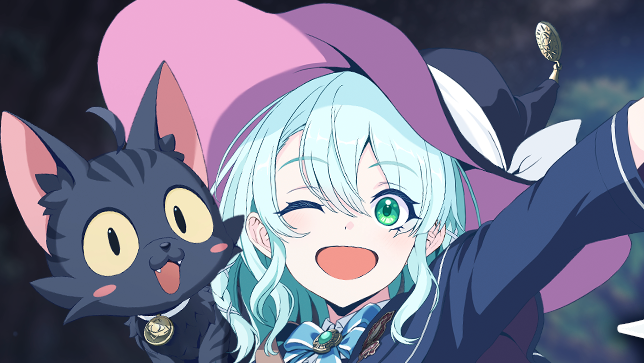
COLOPL, Inc. announced today that STAR STUDIOS’ new mobile title, Quiz Action RPG Wiz Generation (クイズアクションRPG ウィズジェネレーション), will release in Japan on December 1, 2026 for iOS and Android. Alongside the launch date, the official website and YouTube channel published a “launch date announced” trailer that shows the game’s blend of real‑time action and quiz mechanics, plus a glimpse of the story and characters. Wiz Generation pairs on‑screen action with timed question answering: basic attacks build a skill gauge, and when it fills players trigger a “quiz” prompt. Answering quickly and correctly converts that knowledge into flashy special moves. The combat system is described as “real‑time quiz action,” designed so players who prefer quizzes over twitchy controls can still enjoy powerful finishes. The game will be free to download with in‑app purchases. Content-wise the title promises more than 100,000 questions across eight categories, including trivia, entertainment, sports, and life. Question formats range from multiple choice and true/false to ordering and fill‑in‑the‑blank, giving a lot of variety to how answers are presented. Competitive features include a recurring ranked event called the “Magic Tower Cup,” where players nationwide compete on speed and accuracy for high scores. The game also plans periodic live, multi‑player quiz broadcasts using streaming tech so several players can participate simultaneously, aiming to recreate the feel of a live quiz show. The story follows magic academy student Vilo (維洛) and her sister Wiz (維茲), a top‑tier mage and academy teacher. After Wiz is chosen as a challenger for the Magic Tower—whose victor can have any wish granted—a mysterious witch intervenes and Wiz is turned into a cat. Vilo takes her sister’s place and, together with companions, ascends the Magic Tower to restore Wiz and uncover what waits at the top. If you enjoy quick thinking under pressure, Wiz Generation lays out the tools: a real‑time combat loop that converts answers into attacks, a 100,000+ question database across diverse formats, recurring ranked play with the Magic Tower Cup, and scheduled live quiz broadcasts. The official site is https://wiz-generation.com/, with App Store and Google Play pages linked from the announcement.

IDOLY PRIDE to end service on March 1, 2027 after ~5 years 8 months
News Fri, Oct 30, 2026

IDOLY PRIDE to end service on March 1, 2027 after ~5 years 8 months

IDOLY PRIDE, the idol-management RPG developed and operated by QualiArts (a CyberAgent subsidiary), will end online service on March 1, 2027, the team announced on its official X account. The post gives a firm date and outlines plans for live broadcasts and events before servers close. The game launched for smartphones on June 24, 2021, and is part of a larger media-mix project whose TV anime aired in January 2021. Players praised the title for its high-quality 3D idol models and immersive live-stage production; over the years it ran collaborations with Hatsune Miku, The Melancholy of Haruhi Suzumiya, and Gochuumon wa Usagi Desu ka? 10th Anniversary. Across roughly five years and eight months of service, those features and tie-ins were a steady part of its content. QualiArts says it will hold live streams and various in-game events during the remaining service window. After March 1, the team plans to release an offline update so players can keep some form of the experience locally. The company has not published detailed timing or content lists for the post-service offline build. If you’ve been collecting outfits or saving gacha pulls, note the firm March 1 cutoff and the promise of an offline update — the online servers stop then, but a playable offline version is planned afterward.

Studio Atelico opens Early Access to on-device AI engine
AI + Mobile Thu, Oct 29, 2026

Studio Atelico opens Early Access to on-device AI engine

Studio Atelico has opened Early Access for the Atelico AI Engine, an on-device toolkit that lets developers add AI-powered systems to games without routing processing through the cloud. Developers can request Early Access via Studio Atelico’s website, and the engine already runs inside the studio’s own title, Bobium Brawlers. The engine supports language models, image generation, speech systems, semantic search and AI-driven character behaviours, and it can run on either GPUs or CPUs. Studio Atelico says the tech integrates with Unity, Unreal Engine and Godot, and targets Windows, macOS, iOS and Linux. You won’t need a remote server to power those systems — the processing happens locally on the player’s device, keeping player data on-device and removing cloud dependencies. Studio Atelico built a proprietary Compute Graphics Scheduler to run AI alongside game rendering without competing for GPU resources or causing frame drops, the company says. The engine also includes authoring tools to create characters with distinct personalities, memories, relationships and motivations, so NPCs can change behaviour over time instead of following fixed scripts. “We believe the future of AI in games isn't about replacing developers. It's about giving them the tools to create experiences that weren't previously possible,” said CEO Piero Molino. Concrete takeaway: because the Atelico AI Engine runs locally on CPUs or GPUs and uses a scheduler designed to avoid GPU contention, studios can add persistent, on-device AI systems (from dialogue and speech to evolving NPC behaviour) while avoiding cloud processing and keeping player data on-device — and developers can try it now through Early Access.

Vampir launches globally Oct. 27 on PC and mobile
News Thu, Oct 29, 2026

Vampir launches globally Oct. 27 on PC and mobile

Netmarble’s vampire MMORPG Vampir expanded into additional global markets on October 27, arriving on PC via the Epic Games Store and the game’s official PC client, alongside iOS and Android. The release includes cross-platform play and follows earlier regional rollouts in South Korea, Taiwan, Hong Kong, Macau, and Japan. Vampir first launched in South Korea in August 2025, where it topped the grossing charts on both major mobile storefronts. Netmarble then opened the game in Taiwan, Hong Kong, and Macau in March 2026, and in Japan in July. The title was developed by Netmarble Neo, a team that includes staff who previously worked on Lineage 2: Revolution and Ni no Kuni: Cross Worlds. The game leans into a gothic horror theme built around vampires, blood, desire, and destruction, with a story about characters enmeshed in conflicts over power, ambition, and survival. To mark the global expansion, Netmarble is running multiple launch events: a four-week mission event that hands out up to 1,100 Bloodshape and Mount Summon Tickets; daily login gifts including 100 million Gold, Rare Equipment, a Designated Heroic Mount Summon Ticket, and various upgrade materials; and level-based reward tracks. Players also get a 20% boost to EXP and Gold earnings, Cumulative Summon Missions for extra items when using summon tickets, and a Discord welcome coupon redeemable for character upgrade materials. If you like cross-save convenience and a full slate of launch bonuses, Vampir’s global rollout gives new players a fast path to mounts, summons, and currency. The combination of cross-platform access and four weeks of mission rewards makes jumping in on PC or mobile a low-friction way to sample the game’s gothic systems this Halloween season.

Odin cleared for China on the 28th after PC and mobile approval
News Thu, Oct 29, 2026

Odin cleared for China on the 28th after PC and mobile approval

Odin (Chinese title 奥丁:神叛) has passed China’s government content review for both mobile and PC versions, with the approval listed on the national publishing authority’s roster dated the 28th. The entry uses the same Chinese title Kakao Games has used for its Taiwan, Hong Kong and global Chinese-language releases. No launch date for China has been announced. The company handling China operations is listed as Zisun Tech (officially Shanghai Zisun Information Technology), a Shanghai-based studio founded in 2016 that develops and publishes PC and mobile games. The registered publisher on the approval paperwork is Junmeng Games, a Shanghai game studio acquired in 2015 by listed company Fuchun Co., Ltd. Junmeng has prior experience publishing a Korea-origin IP in China: it worked on 仙境传说RO: 新世代的诞生 using Gravity’s Ragnarok license. Odin originally launched in South Korea on June 29, 2021, and remained the country’s top-grossing mobile game for two years after release. Kakao Games increased from sixth to second place among Korean mobile game publishers in that same period. The title began its Asian roll-out through partners—Kakao publishes the Taiwan version with local operator GloHow—and a global version released on April 29, 2025; its global one-year anniversary fell on April 23, 2026. Cumulative downloads across Korea and Asia are reported at 17 million. Takeaway: China’s approval list included 12 games and only one Korean title — Odin — and the filing shows both platform builds and specific Chinese partners already in place, but the company has not set a China release date yet.

No Man's Sky adds FORSAKEN update, iOS version in 2026
News Thu, Oct 29, 2026

No Man's Sky adds FORSAKEN update, iOS version in 2026

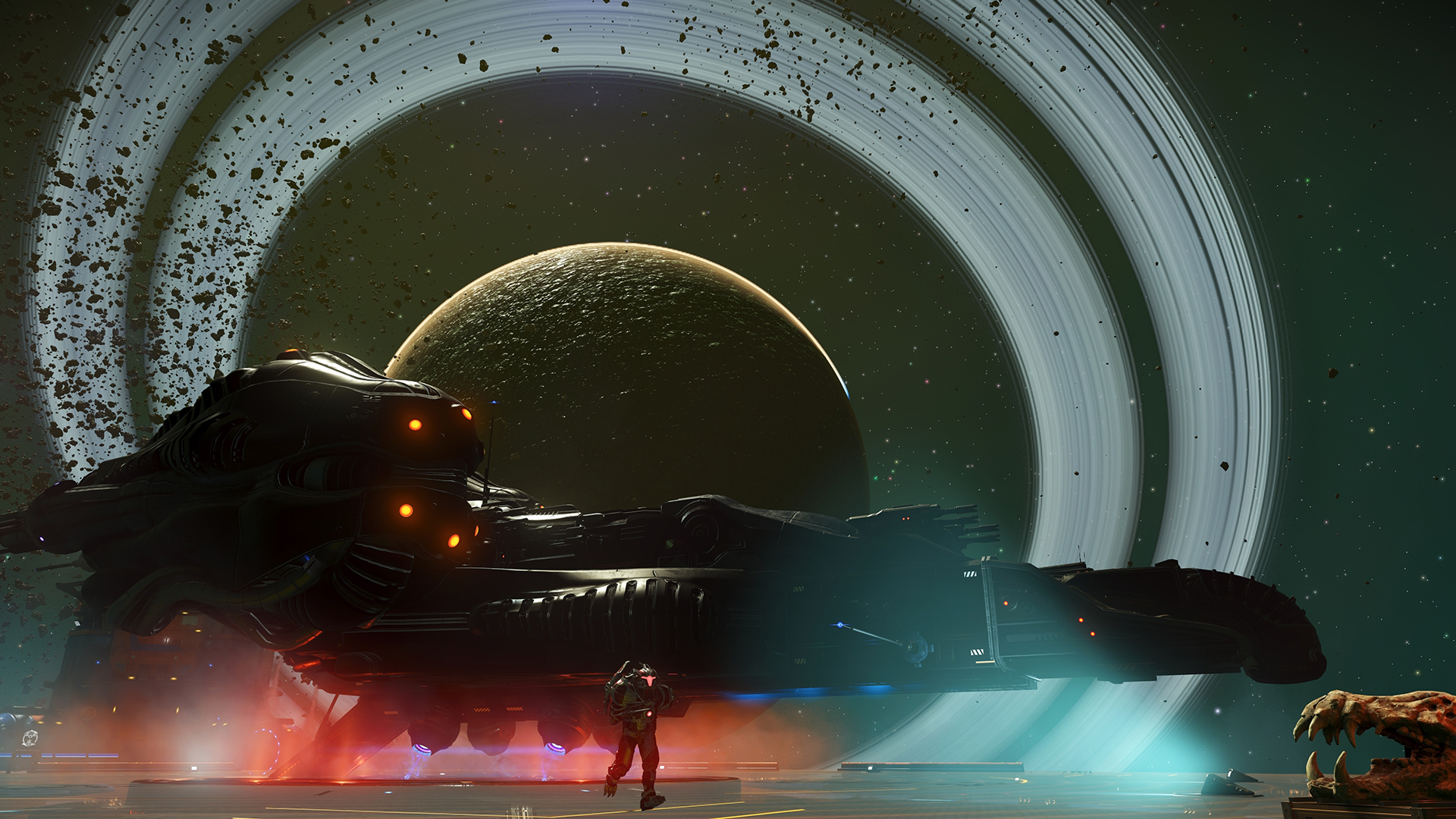
No Man's Sky announces its FORSAKEN expansion for 2026, the fifth major update of the game's 10th year, and also launches a new iOS version that includes more than 40 prior updates. FORSAKEN sends players to eerie locations — drifting megaships, infected outposts, and planetary dig sites — to hunt cursed rare technology and monstrous lifeforms while collecting strange, cursed keepsakes called Mementos. Mementos can be traded with mysterious collectors across the galaxy in exchange for biomechanical corvette modules that let you build corvettes with organic, unsettling looks. The update also adds new cockpits, interior sets, weapon and spacesuit styles, plus specific grotesque gear such as a larval-tank style helmet and a multitool that resembles writhing larvae. Gameplay and QoL additions listed include mail-delivery missions that turn players into interstellar couriers, a radial menu for weapon selection, a minimal HUD mode, and seamless warp to nearby star systems. The iOS release packs the game's history onto mobile: more than 40 updates are included and FORSAKEN is available on day one. Supported devices can try the opening section of the game for free, and Hello Games says the iOS build uses touch-specific controls with optimizations for battery life and heat management. The desktop/console lineage and copyright details remain: No Man's Sky is developed by Hello Games Ltd; original copyright dates handled in Hello Games material include 2013, 2016, and 2022, and the title has been published in partnership with Sony Interactive Entertainment Inc; Hello Games Ltd provides a Privacy Policy and an EULA. Takeaway: if you like your space travel with a side of uncanny biomechanics, FORSAKEN adds cursed loot, corvette customization, and touch-ported access on iOS from day one — plus the usual quality-of-life tools that make long jumps and inventory juggling less tedious.